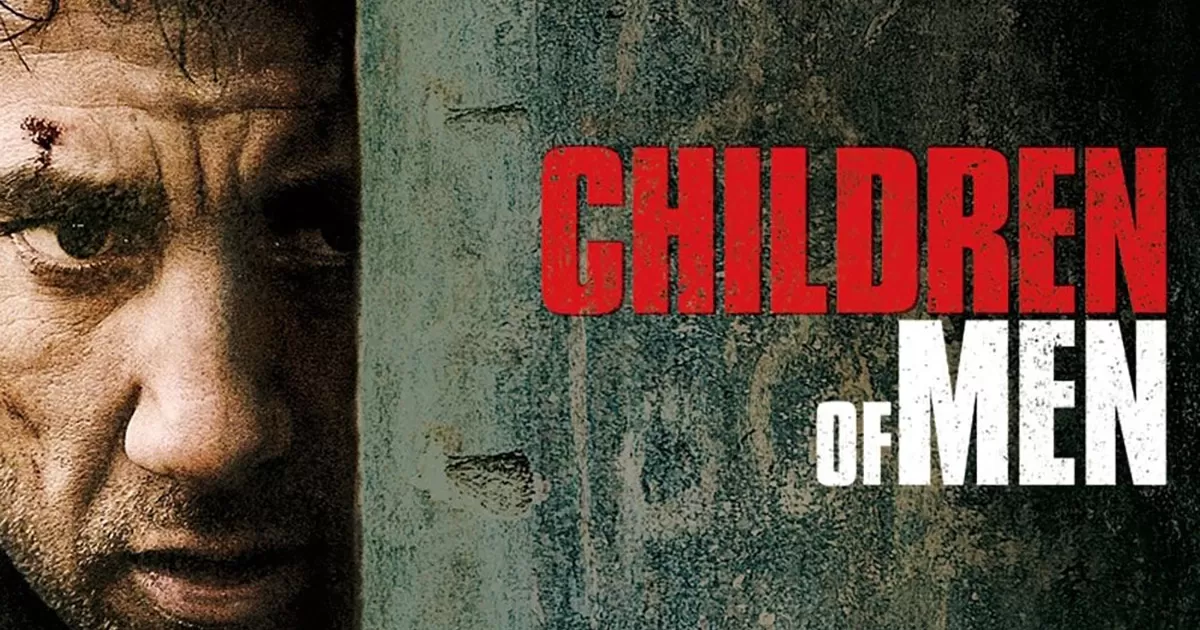
Children of Men (2006) — A Bleak Future, A Fragile Hope, and One Reluctant Hero
The world has stopped having children. Society is unraveling. And in the middle of it all, one man is asked to protect something that hasn’t existed in nearly two decades—hope. Directed by Alfonso Cuarón, Children of Men is a brutal, beautiful, and unforgettable vision of a future on the edge of collapse.
A Future Without Children
Set in the year 2027, the film drops us into a world where humanity has mysteriously lost the ability to reproduce. The youngest person on Earth is 18 years old—and he’s just died. Cities are crumbling, governments are clinging to control, and refugees (called “fugees”) are being rounded up and caged.
Enter Theo, played by Clive Owen—a jaded, weary bureaucrat who’s just trying to survive another day. But when his activist ex-wife ropes him into a secret mission, he finds himself protecting Kee, a young woman who just might be pregnant—the first in nearly two decades.
What follows is a desperate journey through danger, betrayal, and fleeting hope, as Theo risks everything to get Kee to safety and deliver humanity’s last chance at survival.
Grit, Tension, and Immersive Realism
Visually, Children of Men pulls no punches. The cinematography is gritty, intimate, and often terrifyingly real. Long takes drop you into chaotic shootouts, crumbling streets, and desperate refugee camps with no cuts to shield you. The infamous single-shot sequences—especially during the urban warzone in the film’s climax—are masterclasses in tension.
The world-building isn’t flashy. It’s subtle and lived-in. You feel the weight of a dying society through graffiti, background broadcasts, and haunted faces in every crowd. There’s no over-explaining. Just dread—and the tiniest glimmer of something more.
Clive Owen’s Reluctant Hero
Clive Owen gives one of the best performances of his career as Theo. He’s not a chosen one. He’s not invincible. He’s tired, cynical, and just as broken as the world around him. But when hope arrives—quietly, unexpectedly—he leans into it, even when it costs him everything.
Kee, played with raw strength and vulnerability by Clare-Hope Ashitey, is more than a symbol. She’s real. Grounded. Scared. Brave. And together, their dynamic becomes the emotional core of the story.
More Than Sci-Fi
Children of Men isn’t just dystopian fiction. It’s a warning. A meditation on immigration, fear, government control, and what happens when a society forgets how to care. But at the same time, it’s also about resilience. About carrying hope—literally and figuratively—through a world that no longer believes in it.
It’s not flashy or optimistic in the traditional sense. But it earns every moment of awe, sorrow, and grace. And somehow, amidst the rubble, it reminds you that the future can still be saved—even if it starts with just one life.
Final Thought
If you’re looking for a sci-fi film that trades spectacle for substance and spectacle that actually means something, Children of Men still stands as one of the most powerful entries in the genre. It’s bleak, gripping, and surprisingly tender.
And in a world where everything feels like it’s falling apart, this film doesn’t promise easy answers—but it does whisper: There’s still hope. Don’t let go of it.
| Category | Rating |
|---|---|
| Story & Themes |
|
| Characters |
|
| Visuals & Style |
|
| Emotional Impact |
|
| Rewatchability |
|
| Overall | 4.8 / 5 |
A dystopian masterpiece—visually stunning, deeply human, and politically urgent.
Author

Related Posts